Why this book?
This is the 5th – May – book from My Year of Reading 2019 list.
In that post I was specific on the reasons for reading this book, stating the following:
“Recommended to me specifically by Bill Burnett (co-author of Designing Your Life) in response to a question from me in a recent Designing Your Life Facebook webinar about my need to think more wildly and creatively and address my fears. This is a development area for me. “
My reading of the book
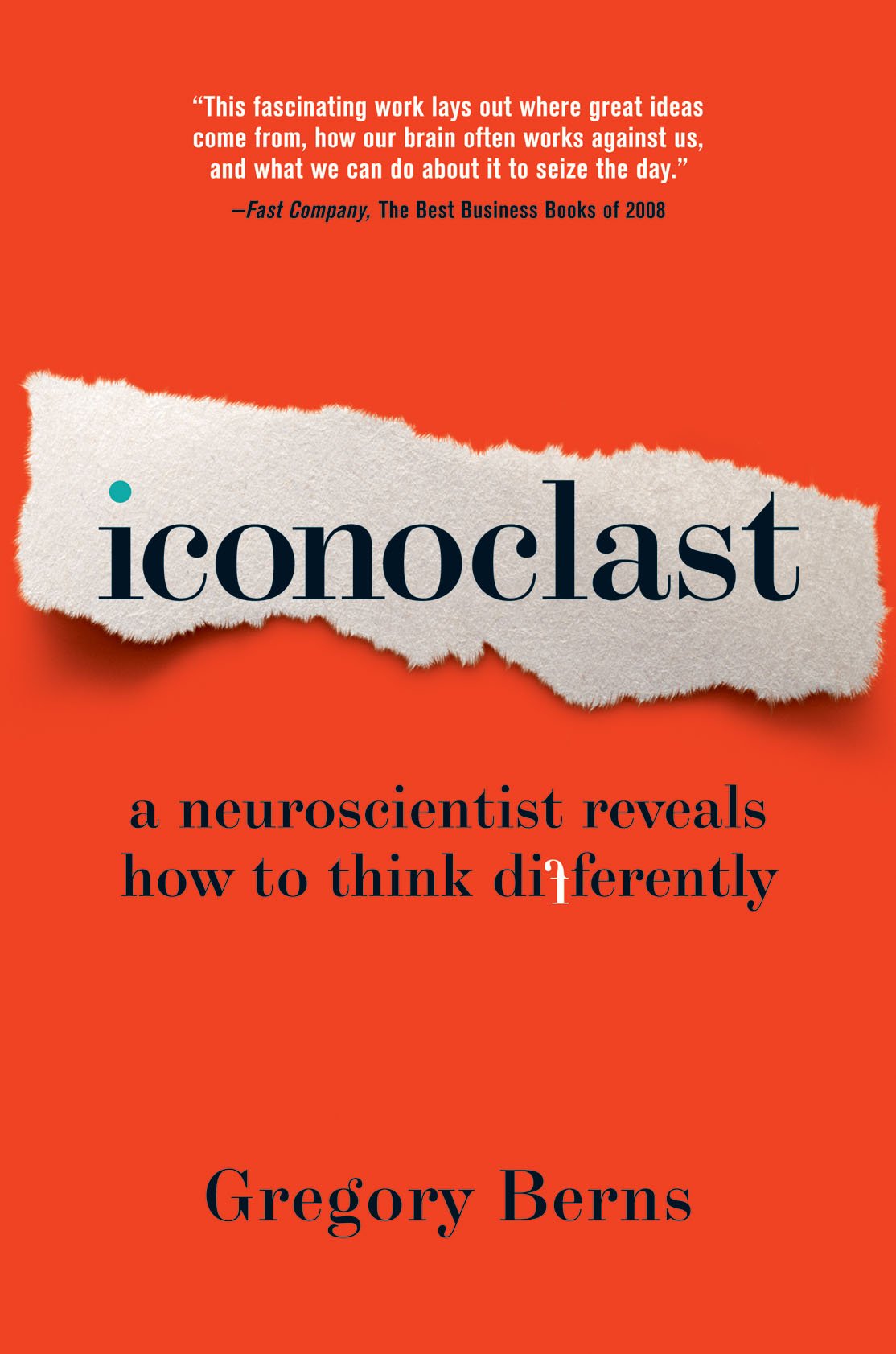
I read the book chapter-by-chapter.
I set myself a set of questions after reading the Introduction but for later chapters for time reasons I simply looked up resources, usually videos, via quick Google-ing.
My overall assessment and response to the book
Lots of learning to take away and apply.
Not a scientist so lots of the content about the brain I struggled with so I concentrated on the lessons drawn from the author’s understanding of his research into the brain.
Lessons:-
- Iconoclasts have a mindset of doing what others say can’t be done.
- How the way we see things fundamentally impacts our creativity.
- The power of imagination in generating new ideas.
- How fear makes us powerless and how to overcome that.
- How fear makes us see things in ways different from what they are.
- How fear of failure prevents us doing things that would be beneficial to us.
- How and why iconoclasts need to understand and leverage people networks.
- When iconoclasts need to work together in teams.
- How iconoclasts become icons.
Introduction: Doing What Can’t Be Done
Book Club Questions
Q1: What attracted you to reading this book in this book club?
A1: It was recommended to me specifically by Bill Burnett (co-author of “Designing Your Life”) in response to a question from me in a Designing Your Life Facebook webinar about my need to think more wildly and creatively and address my fears. This is a development area for me. It is now time for me to read and apply this book. The challenge is real.
Q2: What was your understanding of "iconoclasts" before you started reading this book?
A2: I had heard the term but had no idea what it meant at all. I only explored the word after Bill (above) mentioned the title of this book.
Q3: How much learning about the brain have you done in the past?
A3: Not much at all. I was never any good at all or interested in sciences (in this case, biology). Earlier this year I learned more about the brain in “Make It Stick”. I have never been good at memorising facts and figures to regurgitate in exams etc. That book revealed a whole lot of information about learning and the brain that I wish I would have known 45 years ago!
Q4: The author says that an iconoclast’s brain is different in 3 ways - perception, fear response and social intelligence. Say something about each of these in your own life.
A4:-
- perception: I see things through a Christian world view. I question everything as I see/hear etc it and process whether that is true or valid etc for me. I do see things my way but I always look to make connections with things I already know usually and invariably sub-concsiously
- fear response: I do have confidence issues and a loud inner voice/critic which I am seeking to challenge more aggressively. I am capable of catastrophising and expecting the worst in a number of situations when I overthink specific things.
- social intelligence: I looked for a definition “social intelligence is the capacity to know oneself and to know others.” Over the past 2 years and currently I am learning more about myself than at any other prior period of my life. Doing a Working Out Loud Self-Care circle has forced me to focus on learning about myself rather than subjects outside of myself. Working through Liz Ryan’s “Reinvention Roadmap” and doing every single one of her exercises was a lengthy journey of personal discovery that I am still processing.
Q5: If you let fear inhibit your actions, how does that play out for you?
A5: By paralysis in decision making when it comes to personal things for me. By procrastinating and not addressing work required to just make a decision. I tend to have the view that every decision I make is a one-time deal and that there is one single best way for my life that I am concerned that I will never find. I am continuing to experiment by doing more new things with different people and exploring more widely proactively and reactively to specific situations.
Q6: How do you sell your ideas?
A6: I tend to be a rational sales person, selling the benefits and addressing objections with rationale. I am aware that often purchasing things including ideas is more emotional than that. I am good at generating and evaluating multiple options for anything for myself and do likewise when working with others. I get irritated (may be a bit strong!) when my ideas are ignored or rejected after other people have considered them.
Q7: The author lists the challenges of being an iconoclast as (1) risks social/professional ostracism, (2) frequently alienates colleagues, (3) must face daily reckoning with a high likelihood of failure, (4) a tough road, (5) most people do not want to be one (understanding how their brain works helps manage teams with them in). What is your immediate uncensored response to each of these?
A7: challenges of being an iconoclast:-
- Risks social/professional ostracism: I am strong-willed with strong opinions. I am keen on understanding ideas and have strong views on why I hold some ideas and positions to be true and valid.
- Frequently alienates colleagues: This can be the case where I state my position strongly as others do. This is 2-way. I get alienated by others. Alienate is a strong word and in most cases where there are strong views this is about methods, approaches etc. I would never attack someone personally but their ideas etc are fair game for the cut and thrust of a discussion.
- Must face daily reckoning with a high likelihood of failure: I am conscious that I need to fail more by trying and experimenting by doing new things.
- A tough road: Learning is often tough and normal. I am a completer/finisher and look to “finish” everything I start.
- Most people do not want to be one: From my limited understanding of “iconoclast” thus far, I find the “role” inspiring and I would aspire to be one or a deeper and a wider one if I am one already!
My notes from the book
Howard Armstrong – 1910s – responsible for the 3 basic technologies that make TV and radio possible
patent rights issues with David Sarnoff
much of what Armstrong did ran counter to accepted wisdom, thumbed his nose at authority, took nothing for granted except what he could see with own eyes
his suicide underlines the costs
book looks at biological basis for iconoclastic thinking – the brain – & how it sabotages creative thinking for most ordinary people
Armstrong’s story is cautionary tale – invented so many of basic technologies that ushered in age of comms it is hard to imagine what world would have looked like without them
insights came at pivotal points in history – 2 World Wars
what is interesting about Armstrong is extent of his iconoclasm – explainable by differences in the way his brain functioned
The Brain, Neuroeconomics and the Science of Iconoclasm
decisions that humans make are due to firing patterns of neurons in specific parts of the brain = led to term “neuroeconomics”
risk/reward of getting articles published
tenuous dance between advancing science within existing frameworks vs paradigm shifts
science is as competitive as business
Different Brains, Different Ways of Thinking
operational definition of iconoclast: “a person who does something that others say can’t be done”
the iconoclast’s brain is different in 3 ways:-
- perception
- fear response
- social intelligence
field of neuroeconomics born out of realisation that physical workings of the brain place limitations on the way we make decisions
understand these constraints, start to understand human behaviour and why some people seem to march to different tune
the brain is mortal: consumes energy, performs feats of astounding complexity
suffers constraint of limited resources, fixed energy budget, can’t demand more power for complex tasks – evolved to be as efficient as possible
this is where problem arises for most people and is biggest impediment to being an iconoclast
brain runs on about 40 watts of power – has to be efficient
will draw on past experience & any other source of info such as what other people say to make sense of what it is seeing – takes shortcuts for efficiency reasons
works so well we are hardly aware
perception lies at heart of iconoclasm
iconoclasts see things differently than others – their brains do not fall into efficiency traps as much as average person
either born that way or learned how to do it
altho key process in iconoclasm is perception, this is only the start
perception is not hardwired but a process that is learned through experience – a curse and opportunity to change
everything brain sees/hears/touches has multiple interpretations, the one ultimately chosen is brain’s best guess including probability
these are heavily influenced by past experience and importantly for iconoclasts what other people say
to see things differently than other people, the most effective solution is to bombard the brain with things it has never encountered before
novelty releases perceptual process from shackles of past experience – forces the brain to make new judgements
successful iconoclasts have preternatural affinity for new experiences – embrace novelty
BUT for most people, novelty triggers fear system of the brain
fear is 2nd major impediment to thinking like an iconoclast & stops average person in their tracks
many types of fear – 2 inhibiting iconoclastic thinking:-
- fear of uncertainty
- fear of public ridicule
fear of public speaking – 1/3 of population
simply a common variant in human beings
a true iconoclast while experiencing any fears does not let them inhibit their actions
after conquering perception/fear, to make transition to true iconoclast, the person must sell their ideas to other people
look at social intelligence from biological point of view
research growing into how brain works to co-ordinate decision making in groups
the true iconoclast is not a hermit
decisions taken affect those around us
the modern iconoclast navigates a dynamic social network & elicits change that begins with altered perception & ends with effecting change in other people (or dying a failure)
research into parts of the brain impacting understanding what other people think, empathy, fairness and social identity
these parts play key role in whether a person convinces other people of their ideas
perception plays key role in social cognition too
perception of someone’s enthusiasm/reputation can make/break a deal
understanding how perception becomes intertwined with social decision making shows why successful iconoclasts are so rare: social intelligence depends on perception but perception itself subject to social forces – we see things like other people – cycle difficult to break
Doing What Others Say Can’t Be Done
iconoclasts have existed throughout history
name via Leo III (Emperor of Constantinople) destroyed icon of Christ on palace gates AD 725 – act of defiance against church was to consolidate his power
means “destroyer of icons” and it stuck
the modern iconoclast acknowledges fact that creation is also an act of destruction
to create something new, you also have to tear down conventional ways of thinking
success in this dependent on 3 key circuits in brain
why write a book about iconoclasts?
it is the type of person who creates new opportunities in every area from artistic expression to tech to biz
embodies traits of creativity & innovation that are not easily done by committee
s/he eschews authority & convention
thumbs his nose at rules
but in proper environment, can be major asset to any org
whether you want to be one or not, crucial for success in any field to understand how inconoclastic mind works
not easy to be one:-
- risks social/professional ostracism
- frequently alienates colleagues
- must face daily reckoning with a high likelihood of failure
- a tough road
- most people do not want to be one (understanding how their brain works helps manage teams with them in)
book helps you to learn to think more iconoclastically by understanding how the 3 brain circuits work
can be a real asset to the org
overarching theme is that they are able to do things that others say cannot be done because they see things differently from other people:-
- plays out in initial stages of an idea
- in how they manage their fears
- manifests in how they pitch their ideas to those who are not iconoclasts
exceedingly rare that someone has all 3 traits
each of the 3 is explained with a real life example - someone with all 3 would have ultimate iconoclast’s brain
1: Through The Eye of an Iconoclast
Book Club Questions
None set by me yet. I am in a rush to read the book. May set questions later. If anyone wants to set some questions, feel free to post them as a comment to this post.
Once you have read this chapter you may want to investigate these additional resources that I found while rabbit trail-ing:-
- Dale Chihuly | Talks at Google
https://youtu.be/m6M2y0YhhaU - Forging art and business in Dale Chihuly’s workshop
https://www.youtube.com/watch?v=4NY-9kDMkL4 - COV VENICE INSTALLATIONS
https://youtu.be/liQhhAVpoNQ - Paul C. Lauterbur: Nobel Lecture: All Science is Interdisciplinary - from Magnetic Moments to Molecules to Men
https://www.nobelprize.org/prizes/medicine/2003/lauterbur/lecture/ - @Google in Conversation with Nolan Bushnell
https://youtu.be/l9rNax9h2gM - Interview with Al Acorn, designer of Pong
https://youtu.be/h8x-2_Pcwvs?t=15m50s
My notes from the book
The real voyage of discovery lies not in seeking new landscapes but in seeing with new eyes.
(Marcel Proust)
glass as liquid that behaves like a solid, raise temperature & it becomes a liquid again
Dale Chihuly, iconoclastic glass artist
millions of people have seen his work, ubiquitous
1986: solo show at Louvre
best glass artist since Louis Tiffany
mastered the business of art, huge financial success cf Picasso, Warhol, Hockney
invented the forms of glass he is now associated with, his work has become iconic with some forms copyrighted
the prototypical example of iconoclast: single-handedly tears down conventional notions of glass art, creates something entirely new in its place
illustrates 1st rule of iconoclasm: sees things differently from other people
wears eye patch – anachronistic these days
loss of sight in his eye was defining moment for his art and career
changed his perception
A Different Perspective
conveys his requirements with paint on huge sheets of paper, does not spend much time in hotshop
the paintings sell for $ 00s, lots stuck to ceiling
some relate to specific pieces
team approach to glassblowing known to Europeans for centuries
Chihuly only put it into full-blown action when he had to – 1976 car accident in UK, went through windscreen, lost sight in left eye
lost peripheral vision and no depth perception
continued to blow glass until 2nd accident
surf accident in La Jolla, dislocated right arm, could not work in hotshop
saw the advantages of being detached from the process, made him more creative, do a lot more work than others could
you can see marked change in his output post these accidents – a more asymmetric form
creative ideas came when not searching for them
for many loss of sight is devastating – never the same when lose sight in one eye
biggest impact is how you see yourself
in glass work symmetry prized above all else – a measure of the skill of glassblower, a status symbol
asymmetric vases were mark of rank beginners
his work, like many artists, is extension of the body
humans do not like asymmetry as general rule – use symmetry as mark of beauty
made asymmetry beautiful
Seeing Differently
when we imagine something, it is most often a visual image that comes to mind
vision is not the same as perception
vision: process of photons entering the eye, transformed into neural signals in brain
perception: more complex process by which brain interprets these signals resulting in a mental image that reaches consciousness
eye is simply optical lens and image detector (retina)
then what people’s brains do with the image is an individualistic process
The Anatomy of Vision
explanation of how vision works
gaps in vision filled in by brain with guesses that are generally good but sometimes the guesses fail resulting in brain making incorrect assumptions
the ways in which brain makes these assumptions are same ways it makes it difficult to think like iconoclast
e.g. blind spots unique to humans / primates
explanation of hole in retina that brain fills in
bandwidth of human eye about 1 MB/second
The Anatomy of Perception
after seeing something, info flows from back of head generally forward direction to frontal lobes:-
- high road: info over the top of the brain – where things are relative to the body
- low road: through temporal lobes above ears, categorises what a person sees
as we delve deeper into how this happens, we shall see where it becomes difficult to see things in ways different that you expect
the ability to do this is absolutely essential for iconoclastic thinking
see things finally not as rectangular grid of light & dark spots but as landscape of stationary & moving objects, each with its own identity
the Kanizsa Triangle- perception is a product of the brain & mind not the eyes
brain tends to perceive things as it expects them to be
the most likely way you perceive something will be in a manner consistent with your past experience – feel comfortable & cost little energy to process – uncommon perceptions are hard work for the brain
how the brain creates perceptions from raw visual inputs is critically important to being an iconoclast
iconoclast does not see things differently but perceives them differently
several routes to force brain out of its lazy perception mode
theme linking these is element of surprise – brain must be provided with something it has never processed before to force it out of predictable perceptions
The Iconoclast Who Discovered MRI
MRI only 30 years old
brain is central player in iconoclasm – much of what we know about the brain is due to MRI
story of MRI is story of iconoclasm itself
basis physical principle behind MRI discovered in 1940s
Paul Lauterbur’s revolutionary insight into standard tech for chemists for analysing chemicals
he had consulting roles
no one had thought about using NMR to locate differences inside samples themselves for cancerous or normal tissue
Paul believed NMR could be used to find locations of differences in tissue sample
challenge of getting uniform magnetic field
there was noise in readings – others dismissed – but Paul wondered if this could be used – could you decipher the embedded info to make pics
epiphany was purposely making the magnetic field non-uniform
heretical in NMR
1st article rejected
his insight changed medicine forever – Nobel Prize in Medicine in 2003, 30 years later
we can see where he broke out of conventional thinking
cf visual insights parallel with Chihuly
visual perception is where hunt for iconoclastic brain begins
Persons, Places and Things
from high and low roads to meet in frontal cortex after making judgements of object identities and locations in space
challenge for computers to identify objects and people and yet our brains do it effortlessly
identifying friend or foe rapidly means brain evolved to accomplish amazing perceptual tasks whilst saving energy
retains/discards info while processing
altho spatial location of what we see may be important, most of what iconoclasts do differently from other people lies in how they categorise what they see
understanding how low road pigeonholes objects into categories suggests ways out of predictable perception
cf 20 Questions game, Q1 is this a person or not – ppl are special category of objects
there is a specific part of brain known to respond to human faces
distributed and shared processing of faces
distributed means that brain can reprogram its networks to perceive things differently
altho ability to reprogram neural networks is a key attribute of iconoclast’s brain, does not mean it works for everyone – sometimes must be approached gradually or else iconoclast’s ideas will be rejected
Before Pac-Man, the Iconoclast Who Brought Us Pong
at time of Pac-Man video games were revolutionary
Pong perhaps most iconoclastic of all
all video games based on simple computer version of table tennis
Pong’s inventor – Nolan Bushnell
started designing arcade games – 1 with thrust, fire, rotate – players did not have a category in their brains for interpreting this kind of game
formed Atari (term for Japanese game of Go)
hired Al Acorn to create video version of Ping-Pong
2 weeks for a working prototoype – one ball, two paddles, scores
to everyone’s surprise, remarkably entertaining & addictive
required no instructions or reprogramming in brains of players – field tested at a bar in 1972 – moved arcade games into homes
Seeing Like An Iconoclast
an iconoclast’s brain sees differently from other people’s
the importance of new perspectives in the creation of new ideas
importance of visual system to human mind means many of great innovations began with change in visual perception
often iconoclasts’ key insights are triggered by visual images
iconoclasm begins with visual perception
1st step to thinking like an iconoclast is to see like one
human brain sees things in ways that are most familiar to it
epiphanies rarely occur in familiar surroundings
key to seeing like an iconoclast is to look at things that you have never seen before
breakthroughs come from a perceptual system that is confronted with something it does not know how to interpret
unfamiliarity forces brain to discard its usual categories of perception and create new ones
sometimes the brain needs a kick start to see things differently
sometimes a simple change of environment is enough to jog perceptual system out of familiar categories
e.g. may be one reason why restaurants figure so prominently as sites of perceptual breakthroughs
more drastic change of environment eg travelling to another country is even more effective
in this process the brain jumbles around old ideas with new images to create new syntheses
new acquaintances can be a source of new perceptions – their ideas may destabilise your familiar patterns of perception
by forcing the visual system to see things in different ways, you can increase odds of new insights
sounds easy BUT brain often resists exactly these types of new experiences because they cost energy to process
2: From Perception to Imagination
Book Club Questions
None set by me yet. I am in a rush to read the book. May set questions later. If anyone wants to set some questions, feel free to post them as a comment to this post.
One for my list so I do not forget!
- What do you think of the term “unlearning”?
Once you have read this chapter you may want to investigate these additional resources that I found while rabbit trail-ing:-
- Walt Disney Documentary
https://youtu.be/qBoarGy4GBQ
https://youtu.be/oMSXeDnPldc - Dale Purves: How Evolution Determines What We See
https://youtu.be/QORWM3Pl760 - Florence Nightingale: Changing the Field of Nursing - Fast Facts | History
https://youtu.be/B94Zf4Vye3Y
Documentary
https://youtu.be/hBVX5s43_Ks - Branch Rickey: A matter of fairness
https://youtu.be/zSwM-rqv11s - Kary Mullis' Eureka Moment
https://youtu.be/xd4De47ldYs
Fireside Chat w/ Dr. Kary Mullis - Nobel Laureate, Chemistry
https://youtu.be/nPETGWDWhNE
Sons of Sputnik: Kary Mullis at TEDxOrangeCoast
https://youtu.be/iSVy1b-RyVM
My notes from the book
“Education consists mainly in what we have unlearned.”
[ Mark Twain ]
humans depend on vision more than any other sense to navigate through the world
mostly we take visual process for granted
most of the time efficiency of our visual system works to our advantage
cf baseball hitter .. no time for thought in seeing/hitting the ball
so connection between eye and body must be seamless
automaticity lets us accomplish anything requiring hand-eye co-ordination
to be efficient visual system must make guesses about what it is actually seeing
most of time this works
but the automatic processes get in way of seeing things differently
automatic thinking destroys creative process that forms foundation of iconoclastic thinking
brain fundamentally lazy … hates wasting energy
we use all of our brains but not all at same time
each part of brain performs different function but each needs energy
Gerald Edelman called this neural Darwinism, meaning brain has and continues to evolve by principles of resource competition/ adaptation
efficiency reigns supreme
efficiency principle major implications for visual system:-
- brain takes shortcuts whenever possible
- brain uses circuits like the visual system for multiple purposes
imagination comes from the visual system
iconoclasm goes hand in hand with imagination
before you can muster strength to tear down conventional thinking, must first imagine possibility that conventional thinking is wrong
not enough … iconoclast goes further … imagines alternative possibilities
imagination is fickle process – most iconoclasts have good days & bad days when thinking is stale/cliche
this is the story of search for the holy grail of creativity, an almost childlike imagination and wilful abandonment to dream crazy thoughts
creativity seems to get harder as we get older
brain needs to categorise – more important as we get older, more info! – imagination stems from ability to break this categorisation to see things for what they might be not for what one thinks they are
Walt Disney – The Iconoclast of Animation
Walt Disney was an iconoclast because he changed animation cartoon from being a movie trailer to a main feature
started as illustrator, hard worker, illustrated ads
taken with the idea of combining drawing with movie technology
images on big screen had profound effect on Disney’s visual perception .. gripped his imagination
experimented taking pictures of his drawings
came to see himself as animator not illustrator
did not invent animation but took it further than anyone thought possible
his achievements came after his change in visual perception
images changed Disney’s categorisation of drawing from one of static cartoons to that of moving ones – drawings that told stories in a narrative sense
The Evolution of Perception
perception & imagination are closely linked – the brain uses same systems for both functions
can think of imagination as nothing more than running perceptual machinery in reverse
whatever limits the brain places on perception naturally limit the imagination
recent advances in neuroscience show how big a role experience plays in perception
Dale Purves believes visual perception largely result of statistical expectations – perception is brain’s way of interpreting ambiguous visual signals in the most likely explanation possible and likelihood of these explanations is direct result of past experiences
= a radical theory of perception with major implications for thinking like iconoclast
The Ponzo illusion: lines appearing longer due to past experience of seeing parallel lines receding into the distance, turn the pic upside down – the illusion that the upper and lower lines are different lengths disappears
if experience plays such profound role in shaping perceptions, should be possible to test theory by controlled experiences to see how perceptions change
found that a specific part of brain’s visual system (lateral occipital area) differentiated types of car after training but not before – greater activity when 2 cars of differety categories presented than when the same, no change in activity prior to training
results important – demonstrate:-
- the way we perceive something, function of low road, depends on how we categorise objects – without categories, we do not have ability to see fteatures that differentiate objects – i.e we cannot see that which we do not know to look for
- ability see these subtle differences depends on experience – means that perception can be changed through experience
Florence Nightingale and the Perception of Death
most people die in war from disease not wounds
perception changed with Florence in 1850s
her name synonymous with art/science of nursing
iconoclastic feminist, transformed image of nurse from woman of low social status to professional with technical contributions on par with doctors
also pathbreaker in emerging field of math stats
= iconocast 3 times over
when sewers in Constantinople in Crimean War were flushed, death rate fell
started collecting stats on causes of death & relationship to injuries, nutrition, hygiene
letter to Queen Victoria, used pie chart – could be 1st time such a chart used that led to wholesale change of practice
shattered the prevailing dogma
How the Brain Learns to See
re learning, important elements for iconoclasts:-
- experience modifies connections between neurons so they become more efficient at processing info
- traditionally, psychologists & neuroscientists divide learning into 2 broad categories:-
- (Pavlov dog) classical conditioning aka associative learning
- dog associates certain movements of owner with about to get food etc
- reinforces that view in the owner
other experiment with rhesus monkeys – like every other neural system in brain, dopamine system adapted to environmental contingencies and essentially learned correlation between arbitrary events e.g lights flashing and fruit juice being given
dopamine: neurotransmitter synthesised by very small group of neurons in brain stem (LT 1% of all neurons in brain)
same learning process happens in perceptual system = when brain repeatedly presented with same visual stimuli, neurons in visual system continue to respond but with decreased vigour = repetition suppression – demonstrates brain’s efficiency principle in action
competing theories for repetition suppression:-
- neurons become tired like muscles and do not respond as strongly
- neurons become primed to stimuli, respond faster with repetition which might appear as decreased activity depending on how measured
- (most likely) sharpening hypothesis – neurons in these networks become more specialised in their activity – more energy efficient
From Visual Imagery to Imagination
distributed processing means brain can also construct images when no info coming into the eyes – mental imagery – close relationship to imagination
process of mentally visualising an image is like running the perceptual process in reverse
structures used to visualise something same as those that process something when you actually see it
the strength of activity in visual cortex correlates with intensity/ vividness of what the person visualises – the stronger the activity, the more vivid the scene a person imagines
but efficiency principle works against imagination
cf close eyes and imagine sunset – problem is that this is iconic image that we have seen many times so striking lack of imagination in this visualisation task – brain uses path of least resistance and reactivates neurons that have been optimised to process this sort of scene
imagine something you have never seen, more opportunity for imagination as brain has no prior experience e.g. sunset from surface of Pluto – you have to work new neural pathways to imagine it
reveals a key psychological factor in imagination – to imagine something in detail, you must devote significant amount of mental energy to task
William James (19C psych): attention:
“Everyone knows what attention is. It is the taking possession by the mind in clear and vivid form, of one out of what seem several simultaneously possible objects or trains of thought … It implies withdrawal from some things in order to deal effectively with others, and is a condition which has a real opposite in the confused, dazed, scatterbrained state.”
everyone does know what attention is but not easy to pin down scientifically
divide attention to 2 broad categories based on how long the process operates:-
- sustained attention: acts over extended periods, closely related to drive & motivation
- selective attention: transient & detail orientated – this is what James referred to & because of transient nature has been preferred form to study
details which on casual observation go unnoticed but become revealed only under powers of selective attention – due to this, attention changes perception
if we wish to direct our attention to something, we need to know where to look
networks must be reconfigured every time you look at something different
highly efficient from energy perspective but means limitations on how many things you can process at once
this reconfig of neural networks is also where imagination comes from
sometimes that can happen under internal guidance but mostly a novel external stimulus is required to jump-start the process
Branch Rickey – The Iconoclast who Hired Jackie Robinson
1940s Major League Baseball colour segregation
Branch was baseball team manager
created a number of innovations on the field that are standard today
created minor league farm system – teams developed talent for major teams
war prompted change in his perception of blacks – Christian and economic motives – needed talent and Negro League was last source
became a true iconoclast when started down this route – Jackie was first
Rickey always had talent for management but it is Jackie story that propels him to ranks of iconoclasts
we see iconoclast’s imagination in action
Breaking Out of Categories
relationship between perception, insight & imagination goes well beyond basic psychology & historical debates
neuroscience view:-
- imagination comes from using same neural circuits used to perceive natural objects – imagination is like reverse perception
- perception is constrained by categories that individual brings to the table
- categories may not be absolute, they are learned from past experience and that experience therefore shapes both perception & imagination
to think creatively & imagine possibilities that only iconoclasts do, must break out of cycle of experience-dependent categorisation (which Mark Twain called education)
for most of us this does not come naturally – often the harder one tries to think differently, the more rigid the categories become
there is a better way, a path that jolts the brain out of preconceived notions of what it is seeing – bombard the brain with new experiences
only then will it be forced out of efficiency mode and reconfigure its neural networks
1 of most imp scientific discoveries in last 30 years came through just this
Kary Mullis – polymerase chain reaction – the fundamental tech that allows any type of genetic test to be performed
used in genetic fingerprinting, CSI, paternity testing, detection of hereditary diseases & cancer, cloning, genetically-engineered products such as vaccines
Nobel Prize for chemistry 1993
circumstances of his discovery make him iconoclast
sparked off by California buckeyes heavily in blossom leaned over road in the mountains
[ Simon: info on buckeyes: https://www.pacifichorticulture.org/articles/california-buckeye-a-tree-for-all-seasons/ ]
DNA-related discovery after 6 months of subsequent trial and error
the crucial insight (all the pieces were already known) was how to link the various technologies that would have far-reaching ramifications
the insight came in a novel environment
Novelty as a Trigger for Running the Perceptual System in Reverse
brain extraordinarily efficient in using its resources – too efficient
brain perceives things in ways it has become accustomed to
only when brain confronted with stimuli it has not seen before does it start to reorganise perception which then spills over & influences the internal images that can be held in mind’s eye
fortunately the networks that govern both perception & imagination can be reprogrammed
by deploying attention differently
difficult to do this under normal conditions
typically takes novel stimulus – new piece of info, or getting out of normal environment in which a person is comfortable – to jolt attentional systems awake & reconfigure both perception & imagination
the more radical / novel the change the greater the likelihood of new insights being generated
to think like an iconoclast you need novel experiences
seek out situations in which you have no experience
may have nothing to do with your current expertise – it does not matter – because same systems in brain carry both perception / imagination, there will be crosstalk
novel experiences, esp big changes such as relocations, are prominent in imagination of iconoclast
but the real target is categorisation
iconoclast maintains state of vigilance over the use of categories
an effective strategy to fight this is to confront categories directly:-
- whether categorising a person or an idea, write out the categories
- jot down some words that categorise an idea
- use analogies
- you will naturally fall back on things you are familiar with
- allow yourself the freedom to write down gut feelings, such as stupid or hot
- only when you consciously confront your brain’s reliance on categories will you be able to imagine outside of its boundaries
Chapter 3: Fear: The Inhibitor of Action
Book Club Questions
None set by me yet. I am in a rush to read the book. May set questions later. If anyone wants to set some questions, feel free to post them as a comment to this post.
Once you have read this chapter you may want to investigate these additional resources that I found while rabbit trail-ing:-
Resources:-
- Jackie Robinson (AMAZING MLB Baseball Sports Documentary)
https://youtu.be/K8xS8lZl2RI The Dixie Chicks Explain Their "Ashamed President Bush is from Texas" Comments to Diane Sawyer
https://youtu.be/HzeQmOYdFqUPavlov's Theory of Classical Conditioning Explained!
https://youtu.be/qSqWiTG-o2YSanjay Kumar
Wikipedia page: https://en.wikipedia.org/wiki/Sanjay_Kumar_(business_executive)Jim Lavoie
BIF 2: Jim Lavoie - Innovating Everyday Through The Quiet Genius of His Employees
https://youtu.be/5iyWpOcDeQQ
My notes from the book
“I have learned over the years that when one’s mind is made up, this diminishes fear; knowing what must be done does away with fear.”
(Rosa Parks)
Jackie hired by Branch was also an iconoclast for accepting
Jackie’s life story, grandson of a slave
knew pains of discrimination from early age but did not let fear get in way of what he did
for going against overwhelming opinion that blacks were incapable of playing in the majors, Robinson deserves the label “iconoclast.”
1st game in inter-racial team, lots of abuse
as with every iconoclast, a point in time etched in memory when something changed their perception of the world
how did he do it?
how does an individual kill fear of unknown, physical harm, social isolation
answer in how brain deals with 2nd key function of iconoclasm – fear response
Fear: Mother of All Stress
fear feels bad, body under stress
a stereotypical human response
triggers vary by individual
picture of stress always the same:-
- blood pressure increases
- heart beat increases
- sweat glands secrete
- mouth dries up
- fingers tremble
- voice cracks
- stomach churns
a part of our evolutionary history
stress system can override every other system in brain
not rational – reacts when provoked – reaction powerful enough to derail many of most innovative people
ability to tame the stress response is 2nd great hurdle of becoming an iconoclast
stress response made up of:-
- neural system
- controlled by autonomic nervous system
- sympathetic system – activated during stress
- connect the brain to the body’s internal organs
- can operate well without the brain so low-bandwidth connection
- responsible for orgasm
- parasympathetic system – turned off during stress
- just as important for human life
- not as much attention to this – responsible for quiet, restorative aspects of life
- single large nerve from brain – vagus nerve
- performs as ANS but in reverse – slows down the heart, speeds up digestive process
- responsible for sexual arousal
- sympathetic system causes problems for iconoclasts – not well suited for or have anything to do with creativity & innovation & hormonal system – whole point of this system is action without thought
- hormonal system
- hormones cause physiological responses in target organs
- hormones circulate through whole body in bloodstream
- effects more widespread
- longer to affect body
- only one important hormone for stress – cortisol
- released when brain says so
- effect more subtle & long lasting
- direct different organs in body to change physical config eg responses to physical injury or starvation
modern stress is different – in past was physical threats, now major stressors come from social reasons – conflict with spouse, boss, competition with peers
brain not immune from effects of stress either
it initiates stress response
brain remodels itself in response to stress
some remodelling occur at neuronal level through simple learning mechanisms
other changes happen under effects of hormones such as cortisol
physical changes may have wide-ranging effects on behaviour
repeated stressors cause changes in key parts of brain related to decision making and iconoclastic thinking
The Accidental Iconoclast: Fear and the Dixie Chicks
sometimes iconoclast arises from most unlikely circumstances – an accidental iconoclast
e.g. Natalie Maines (lead singer, Dixie Chicks), London 2003 in-between songs in concert, critical of US president & coming from Texas
country music is patriotic, uproar
took a stand v dogma that country music = unflagging patriotism
public destruction of CDs cf Nazi book burning
death threats
did not let their fear of public ridicule or even fear of death prevent them from standing up for what they believed
common attribute among iconoclasts – they transform the emotion they are felling into something else
transformed fear into pride
recognising that fear can paralyse action, iconoclast takes the automatic arousal of fear and uses it for something productive
Fear Conditioning
Ivan Pavlov – Russian psychologist – discovered classical conditioning – neutral stimulus – conditioned stimulus - paired with something that evokes a response such as food – an unconditioned stimulus
conditions the response to the neutral thing
classical conditioning can use desirable (appetitive conditioning) or undesirable (aversive conditioning) responses
critical processing centre for fear conditioning – amygdala – critical for emotional processing and is gateway for fear responses
amygdala also influences functioning of perception itself
experiments: after pairing dual responses for a few times, auditory neurons had shifted their preference to match the responses & the change persisted for weeks
demonstrated the powerful effects of fear conditioning on perception itself
these changes are profound & long lasting
extinction – where the 2nd of the pair responses is removed, the fear response is removed but not altogether, diminish overtime
means that conditioned fear responses are inhibited but not eliminated
also means that conditioned fear responses can appear with only slight provocation
Computer Associates and the Fear of Failure
fear of public failure & ridicule has toxic effects on individuals & organisations
case study of Computer Associates showing how both can tear org apart
hostile takeovers of competitors then ultimatum to staff in taken over company to accept pay cut or leave + questionable accounting practices, court cases with CEO Sanjay Kumar getting prison sentence, Charles Wang never indicted
mgt style of fear & intimidation so no dissenting voices
good example of how to inhibit both innovation & iconoclastic thinking when fear is pervasive – you can only grow in that circumstance by acquiring other companies for their innovations
An Alternative to Fear: The Idea Market
Jim Lavoie & Joe Marino – story of Rite-Solutions – software for submarine command and control systems and visualisation tools for helicopter rescie missions – culture of fun and innovation
they are not iconoclasts but want to coax potential iconoclasts out of their shells – the opposite of the CA mgt style
idea market their response to this requirement – each employee gets $10k opinion money to “invest” in ideas that gains interest as ideas go through the process – interest money – but also spend time on the idea in investment phase
market helps people create their own jobs
a novel solution to social fear & how to unstifle innovation
does not remove all fear of sharing your ideas publicly but does attempt to take the drama out of it
[ Simon: visibility cf WOL and Show Your Work. ]
helps decrease the 3rd fear that gets in way of iconoclasm – fear of the unknown
Fear of the Unknown: A Biological View of Uncertainty
entirely different type of phobia from fear of failure but it is also processed through amygdala
good news as means pathways by which fear inhibits behaviour flow through this one structure
knowledge of the amygdala can be used to address this roadblock to iconoclasm
ambiguity stems from a lack of knowledge – brain tries constantly to predict what will happen next and when it can’t results in foreboding
[ Simon: “foreboding”: “a feeling that something bad will happen; fearful apprehension”]
people better at responding to this than others but is universally experienced the same way
some clues on how to handle via neuroeconomics
Ellsberg Paradox – urn 1 with 10 black & 10 white marbles, urn 2 with 20 marbles – game 1 pick a black marble … game 2 pick a white marble -
most people choose urn 1 for both due to fear of unknown – ambiguity aversion
MRI scan – regions more strongly activated to ambiguity are underside of the cortex above the eyeballs (orbitofrontal cortex) and the amygdala
Taming the Amygdala Through Reappraisal & Extinction
long memory, once encodes unpleasant association, it does not forget
responsible for traumatic flashbacks
2 ways to keep it in check:-
- proactive – prevent / limit brain from making unpleasant associations that it will remember
- reactive – acknowledges that unpleasantness is unavoidable but need not be paralysing
for many, the fear types that get in way of iconoclastic thinking were laid down long ago
often formative experiences from childhood & adolescence that rear their heads in adult life
e.g fear of public speaking – most common phobia – 30% in USA, an acquired phobia
cf conditioning from earlier in book
some phobias may be innate and hardwired such as fear of snakes/spiders
so instead of trying to eradicate the fear response, better to examine the situations that set off the amygdala & use prefrontal cortex to inhibit it
cf Ideas Factory removed lots of the social drama from the process, encouraging people to pitch their ideas in
power of virtual platforms to remove drama
other triggers of the amygdala need a different approach – cannot eliminate uncertainty!
simple psychological approaches
amygdala has:-
- input stage
- makes the associations between environmental cues and unpleasant events
- central part of amygdala that is primarily responsible for activating the stress response
- output stage
- a conditioned fear may never go away, the output, expression of this fear can be inhibited
- one of most effective strategies is cognitive reappraisal: reinterpreting emotional info in a way that emotional component is diminished
- e.g. someone crying outside church could be for a funeral but may be for a wedding = perception
- replace a negative reaction with a positive one – the prefrontal cortex inhibits the amygdala
reappraisal works well for short-term stressors
can be difficult to implement on own without a mentor/friend
someone reframing circumstances in non-emotional terms may be enough
much of problem with acute stressors is from perception
perception from brain so reappraisal works well to change perception in such a way that fear system not activated
to extinguish perception, you must experience conditions that lead to the stress response but without the unpleasantness
may need more active measures to accelerate the extinction of unpleasant memories
e.g. Toastmasters for public speaking
fear of unknown can be handled in same way – reappraisal / extinction
risk aversion is value judgement based on known probabilities & outcomes (see chapter 5)
ambiguity aversion is straight from fear of unknown – a deeply ingrained biological tendency
but it can still be inhibited
a technique that may be particularly effective is to convert ambiguity into risk – a form of reappraisal – eg apply probability to 2nd urn
Bayesian updating – statistical process of using new info to update probability estimates
key reappraisal for ambiguous circumstances is to view ambiguity as opportunity to gain knowledge – converts ambiguity to risk judgement
stress creates opportunity – think reappraisal – cannot run from stress all your life
reframe stress as opportunity and stress may decrease
do some fixed term project work alongside ongoing to get confidence and reduce stress
cognitive strategies highly effective at keeping fear system under control (with origin in prefrontal cortex)
so rather than people needing to avoid situations that cause fear or circumstances that make them stress out, neuroscience showing how rational part of brain can regain control over such toxic emotions like fear
Chapter 4: How Fear Distorts Perception
Book Club Questions
None set by me yet. I am in a rush to read the book. May set questions later. If anyone wants to set some questions, feel free to post them as a comment to this post.
Once you have read this chapter you may want to investigate these additional resources that I found while rabbit trail-ing:-
Resources:-
Challenger: A Rush To Launch:
https://youtu.be/2FehGJQlOf0FUN TO IMAGINE with Richard Feynman BBC2
https://youtu.be/P1ww1IXRfTAThe Fantastic Mr. Feynman [2013] | BBC Documentary
https://youtu.be/VdYujzyaX68Asch Conformity Experiment
https://youtu.be/TYIh4MkcfJA
My notes from the book
“The soft-minded man always fears change. He feels security in the status quo, and he has an almost morbid fear of the new. For him, the greatest pain is the pain of a new idea.”
(Martin Luther King Jr.)
last chapter saw that fear can inhibit action
fear also has potential for interacting with perceptual system and changing what a person sees or thinks s/he sees – a more dangerous scenario
when fear changes perception, a person not necessarily inhibited from action but may choose wrong course of action
sometimes results are deadly
28 Jan 1986 – Challenger disaster – fatal result of chain of bad decisions – poor mgt practices and minimisation of risks – accident rotted in history – failed to recognise something as a problem, failed to fix it, treated it as acceptable risk
gradual shift in perception about the design – cost considerations overrode all other objections – main focus on timescales
fear itself changed perception of risks
When The Emperor Has No Clothes
Richard Feynman (Nobel Prize – Physics) laid blame on NASA mgt
unlike many in this book, he did not learn to become an iconoclast, he was one from birth
surpassed teachers at school in maths
when German physicists proved that matter was really composed of invisible, discrete particles called atoms, this was single greatest discovery of all human history to Richard, shaped his view of world but short-lived fascination
studied physics at Princeton – created new graphical way of representing these types of problems … was basis for his future Nobel Prize
persistent scepticism
unwillingness to accept any assertion on authority
reputation for seeing things differently, spotting mistakes even when did not know the right answer
looked at calcs from unique vantage points
Manhattan Project showed him how iconoclasts made decisions – each person stated view then collective decision without repetition
innate sense of seeing things his way & refused to be intimidated by others
refused to let unfounded fears of blindness get in his way of seeing 1st atomic explosion
this refusal to let fear colour his perception makes him most iconoclastic physicist ever
A Minority of One
for most people the willingness to stand alone for one’s opinion does not come easily
fear of social isolation
millions of years have produced a human brain that values social contact and communication above all else
the way in which we interact with each other is, in many ways, more important than what our own ears/eyes tell us – the brain takes in info from others & incorporates it with info coming in from own senses – often group opinion trumps individual’s before s/he is even aware of it
while we readily ascribe our thoughts / feelings to ourselves the truth is that many of our thoughts originate from other people
great value in belonging to a group:-
- safety in numbers
- wisdom of the crowd
explains why so few people become iconoclasts
understanding these affects can encourage would-be iconoclasts & foster conditions for innovation in our orgs
Asch Experiment – length of lines – 1 subject with several plants giving the same wrong answers – it was the group pressure to give the wrong answer that made the choices seem difficult – most subjects caved to group pressure one third of the time
See As I Say
Asch was iconoclast – created the field of social psychology
aimed to understand how millions of Germans could go along could blithely follow Nazi extermination
replicated results hundreds of times
even when you strip away all ambiguity of what an individual sees & no possibility of personal gain or reprisal, people will still go along with the group
we know what we see, we know right from wrong but with enough social pressure we cave in to fear of standing alone
but there is a door open to act as individuals when we choose but we must be brave enough – even in neutral lab setting most people not that brave
you may say you would be brave ..
what if we do not have that much free will as we would like to think? what if groups change how we see the world? – more pernicious form of conformity that we are not aware of .. and one that dooms the would-be iconoclast before s/he even knows it
much debate over extent to which perception can be altered by fear
challenge is that if a person’s perception was truly altered they might not even know it
Asch realised at least 2 distinct mental processes go into making perceptual judgment:-
- perception itself
- perception shaped not only by what the eyes transmit but by individual’s expectation of what they are seeing
- judgment
- a type of decision making
important: these are distinct cognitive processes & potentially mediated by different parts of the brain
perception has never been fully separated from judgment process … until fMRI came
author’s experiment to see how fear might change perception
via fMRI try to see if perception or decision making parts of brain changed
experiment: 1 subject with 4 actors – all had own computer, saw something, see other people’s answers – pairs of 3D shapes, are they same or different? – the 4 answering incorrectly – 86% when 4 gave correct answers, 59% when 4 gave incorrect answers (cf coin toss) – various answers to how they decided – fMRI showed … group’s answers took some of the load off the decision-making process in frontal lobe – non-conformity went along with increased activity in amygdala showing unpleasant nature of standing alone even when the person had no recollection of it – in many people, brain would rather avoid activating the fear system & just change perception to conform with social norm
A Lesson In Conquering Fear
Martin Luther King, Jr, perhaps greatest iconoclast of civil rights movement knew 1st hand damaging effects of fear on perception
championed rights of blacks, incurred wrath of whites
cues from Gandhi, philosophy of non-violent civil disobedience – addressed fear as provided safety in numbers
“I have a dream” speech
Malcolm X had view of more direct confrontation
Nobel Peace Prize acceptance speech: “Non-violence has also meant that my people in the agonizing struggles of recent years have taken suffering upon themselves instead of inflicting it on others. It has meant, as I said, that we are no longer afraid and cowed. But in some substantial degree it has meant that we do not want to instill fear in others or into the society of which we are a part.”
viewed non-violence as only way to eliminate damaging effects of fear
so we start to see how individual must invoke conscious, rational thought to control fear
now look at where power of intimidation comes from
The Law of Large Numbers
evolutionary theory of perception + efficiency of brain means perception is statistical process
object categorisation markedly influences our perception
not only based on our experience but also other people
issue over group pressure but even more of an issue when result/answer is unknown, we may be more susceptible to group influence
more people are likely to be correct than 1 person on own
the statistics of aggregating info
e.g. # of jelly beans in jar, large number of guesses, average likely to be close to the right answer – but guesses need to be independent of each other
Jacob Bernoulli (Swiss mathematician) proved this via maths in 1713 – law of large numbers – more numbers you take, the more accurate the average will be
perception is statistical judgement of the brain
law of large numbers is the bane of the iconoclast – is hardwired into our brains
powerful biological mechanisms that make it extremely difficult to think like an iconoclast
our brains evolved to make judgements as quickly/efficiently as possible & when other people’s opinions are present, brain will incorporate them, whether we want to or not
Mitigating The Effects Of Fear On Perception
all strategies re amygdala in previous chapter apply here
e.g. cognitive reappraisal works to effectively look at a situation that induces fear from different vantage point
also strategies that work specifically in situations where fear of isolation has potential for changing perception – no one likes to look stupid but pain of being odd person out often seems worse
there IS a straightforward workround for brain’s hardwired propensity to follow the herd
a minority of 1 is most extreme form of iconoclasm – a person standing entirely alone vs crowd
tactic of avoidance just postpones confrontation
develop a tough skin and not care what others think a la Feynman
in experiments, only 1 dissenter is enough to break herd effect
for iconoclast, most effective strategy is to find one other like-minded individual
just need 1 ally to maintain one’s own judgement
groups are superior to individuals but only if they are diverse and individuals act as individuals
availability of minority position breaks stranglehold of conformity & more likely to make better decisions
for orgs implications clear, do not require unanimous decisions – encourage dissent – beware voting round the table – instead for choice of A or B, vote out of 10 where 0 is A and 10 is B so distance from either end is strength of view – or closed ballot
example of diversity leading to better decisions
effective strategies for individuals mitigating fear:-
- cognitive reappraisal
- extinction
- in general, impossible to stay fearful of something for a long period of time
- need to respond to address the fear and repeat
- per MLK, make fear the target – deconstruct what the fear is, address each element – key is recognise the fear and not make judgement while under influence of fear
Chapter 5: Why The Fear Of Failure Makes People Risk Averse
Book Club Questions
None set by me yet. I am in a rush to read the book. May set questions later. If anyone wants to set some questions, feel free to post them as a comment to this post.
Once you have read this chapter you may want to investigate these additional resources that I found while rabbit trail-ing:-
Resources:-
- A Long-Time Contrarian Learns Some New Tricks; David Dreman
https://youtu.be/vyTfyA_hqhE - Bill Miller - Independent Investor
https://youtu.be/2QNxfCNFIAw - Andrew W. Lo: "Adaptive Markets: Financial Evolution At The Speed Of Thought" | Talks at Google
https://youtu.be/__teQiAK0dg - Andrew Lo
https://youtu.be/x8AsJl0F5Ck - AMERICAN EXPERIENCE | Henry Ford, Chapter 1 | PBS
https://youtu.be/Vcr3YQK0eEY - Henry Ford - PBS American Experience
http://www.pbs.org/wgbh/americanexperience/films/henryford/
My notes from the book
“Making money in the stock market is so simple a monkey could do it. Here’s the secret: Buy low and sell high.
[ David Dreman ]
fear prevents people from taking action, and worse, changes the way they see the world
fear touches everything we do on a daily basis – most clearly evident in stock market – fear manifested in all its glory
types of fear:-
- fear of unknown
- fear of failure
- fear of looking stupid
few arenas more punishing to iconoclast than stock market
view risk initially as odds of failure
fear of failure prevents us taking a risk even when it can be profitable to do so
there are biological reasons for this behaviour that originate in brain’s distortion of perception esp under influence of fear
so common that simply not behaving like this makes for an iconoclast
the successful Wall Street iconoclast is fund manager who beats market consistently
for every person buying a stock, there is a seller, who is right? who is the iconoclast?
The Economics of Risk
probability of coin tosses – St Petersburg paradox (Daniel Bernoulli, 18C)
offer to pay £20 for someone to accept bet, bet is £2, heads they get the £20, if tails, person doubles the pot and so on each time, so pot doubles each time, expected value of each round is £1, ultimately expected value is infinity
the fact that people are unwilling to wager anything significant on the game, despite maths rigour of value determination, shows fundamental irrational way humans deal with risky decisions
Bernoulli proposed solution to paradox – people do not value money linearly – intro of idea of utility – value not price but utility – subjective benefit that a person experiences
£100 worth more to poor person that rich person
diminishing marginal utility
proposed that utility was log curve, flattens out higher you go
utility of game is no longer infinite
each person will have finite price they are willing to pay to play
from economic point of view, risk is anything where possibility of loss
people’s perception of value is distorted – so £1,000 not 10 x more valuable than £100
people afraid of alternative - losing money – fear of failure – distorts functioning of perceptual system in brain
end result is irrational decision
only the iconoclast resists this type of perceptual distortion
if utility line was straight line, your would behave in objective, risk-neutral manner
the only way to invest money rationally
John von Neumann and Oskar Morgenstern formalized the idea that all decisions could be understood if one assumed that individuals make choices as if they were trying to maximize their utility – calc-ed by multiplying utility of every scenario by probability then decide on highest expected utility (EU)
remains foundation of almost all economic models of human decisions
majority of people do not consciously do the maths to make decisions this way but brain does perform these kinds of calcs
people who do this are probably the true iconoclasts
all other people have decision making issues …
The Contrarian – David Dreman
if only you can set aside the fear of failure & possibility of looking stupid while your peers surpass you
at 70, DD had weathered several stock market storms & written several contrarian investment books
$6bn assets managed via contrarian principles
11.2% growth vs 8.6% of S&P 500, in top 20% of funds with 10 year records
contrarian: out-of-favour stocks and therefore iconoclastic
such stocks easily identifiable by straightforward measures of valuation – p/e ratio below market average & many in bottom 5th
statistically low p/e stocks outperform over time
problem totally anchored in psychology, in brain’s perceptual systems
p/e ratio is stock price divided by earnings per share .. how much the market values the company relative to what it is currently earning … high: will earn more in future than now
reasons for low ratios:-
- company is fundamentally solid, earnings above market rate but for perceptual reasons out of favour with investors
- end of its life
father was contrarian investor
how do you resist the pull of the crowd? how do you resist the fear of standing alone?
calm temperament & self-confidence helps
biological factors?
The Iconoclast Who Beats the Market: Bill Miller’s Approach
if this approach really worked then all would do it and under-valued stocks would increase and cease being under-valued
so DD deserves label of iconoclast
but all company info is known to all – efficient market hypothesis (EMH) via Eugene Fama – informationally efficient so no info advantage over other people – states that impossible to consistently outperform the market
but a small group of funds/fund managers do tend to do better than others on consistent basis
Bill Miller, manager of Legg Mason Value Trust, $20bn, beat S&P 15 years in a row until 2006 – either luckiest of all fund managers or most iconoclastic
certain assumptions make it possible to exploit advantages
like DD, Miller adhered to value approach in investing, Benjamin Graham an early influence
Miller goes beyond p/e to future earnings so goes beyond Graham
to Miller distinction between value & growth investing is arbitrary - growth is input to calculation of value
many high p/e stocks are a bargain when viewed from future earnings perspective
like all iconoclasts, Miller often able to maintain different perception of value
problem tho is calc of future earnings more art than science
uncertainty inherent to the process
it is the fear of this uncertainty that prevents many/most investors from using this method
like other iconoclasts, Miller does not let fear of unknown cloud his perception of value
The Biology of the Fear of Failure
fear of failure also prevents most people from taking chances
makes people risk averse
wends it way through brain, distorting perception & inhibiting action
ability to deal with bad news & maintain one’s perception is a key iconoclast successful attribute
iconoclasts are rare so difficult to pinpoint differences with non-iconoclasts
looked at dark side of decision making: loss
where loss looms, fear follows
some focus on possibility of good outcome, others fixate on negative
sound decision making between these 2 extremes
pain crucial to deciphering iconoclastic brain
experiment about anticipation of pain
electric shocks not unbearable but enough to want to avoid them but had to wait for the shocks and were told how long to start – almost all wanted to expedite the shock and not wait .. a third feared waiting so much that when had chance preferred bigger shock sooner rather than smaller shock later = “extreme dreaders” vs “cool cucumbers”
hyperactivity in parts of brain might be cause of impulsive, irrational behaviour at least when relates to fear of something unpleasant
How Fear Clouds Financial Judgment
Andrew Lo, prof, MIT, researches links between biology & financial decision making
believes in efficient market, exploring biological differences between winners/losers
his work suggests differences between people create small but transiently leverageable profit opportunities
key lies in emotional brain esp fear circuits
2001 worked with Dmitry Repin to measure physiological responses in professional traders – surprising correlations of responses and market trends – blood pressure esp, rose when asset’s max volatility went up – but blood pressure rose in advance of event – meaning response in bodies before events – pick up subtle cues ahead of events – but could not prove causal link – later 1st hint of link between emotional reactivity & performance
Lo went on to look at link between trading results & emotional state and whether specific personality esp good at trading – no correlation
did find positive/negative mood states correlation with daily performance – not surprising re response to gaining/losing money
key finding – strongest for worst traders – let their emotions colour their perception of valuation & cloud their decision making
Henry Ford and Freedom from Fear
iconoclast on several levels – views on capitalism & world peace to dev of assembly line
clearly articulated views on damaging effects of fear on business & how to deal with it
born 1863, farm, Dearborn, Michigan, witnessed hard labour on farm
designed machines to address that labour
became an iconoclast when left to go into car business
developed 2-cylinder engine resulting in Model A
£750, 45 mph, not a best seller but profits invested in the main product – Model T
as with other iconoclasts, his perception of car industry instantly changed when he realised what he could do with vehicle weighing a third less – vanadium – new type of steel in France – 3 times stronger than other steel at the time
1908 started sales – 1st year sold 10,607
not luck – big believer in work
at his core – he had obligation to face uncertainty of future & not fear failure – 2 of basic fears distorting perception
“One who fears the future, who fears failure, limits his activities. Failure is only the opportunity more intelligently to begin again. There is no disgrace in honest failure; there is disgrace in fearing to fail.”
(“My Life and Work”; Henry Ford – free versions: https://www.gutenberg.org/ebooks/7213)
With time, Ford came to believe that money was at the root of these fears: “Thinking first of money instead of work brings on fear of failure and this fear blocks every avenue of business—it makes a man afraid of competition, of changing his methods, or of doing anything which might change his condition.”
a good example of how successful iconoclasts deal with fear
first, most important step, recognise that fear permeates business
fear is a warning sign not guide for action / inaction
once recognised fear can be deconstructed & reappraised
often fear of losing money at root of it
reframe fear as learning opportunity
Using Genetics to Diversify a Team and Mitigate the Effects of Fear
are iconoclasts born or made?
all brains are not created equal
dopamine as key neurotransmitter in decision making
level of dopamine activity can be inferred from a person’s genetic fingerprint
from law of large numbers, should be big benefit in diversifying genetic composition of a decision-making team
Christian Buchel measured relationship between fMRI activity in striatal dopamine system during a gambling task similar to Ellsberg paradox
found greater activity in dopamine-rich areas of brain when winning was more likely – how much was dependent on particular combination of genes
some insensitive to risk, also score highly in sensation seeking
striking implications for decision making esp in groups
some thrive on risk & are comparatively immune to damaging effects of fear on decision making
we do not know whether these forms of the genes are more common in iconoclasts – no one done that study
could find out which you are
and if assembling a team, diversify the genetic portfolio of your team
Chapter 6: Brain Circuits for Social Networking
Book Club Questions
None set by me yet. I am in a rush to read the book. May set questions later. If anyone wants to set some questions, feel free to post them as a comment to this post.
Once you have read this chapter you may want to investigate these additional resources that I found while rabbit trail-ing:-
Resources:-
Why Picasso Outearned van Gogh
https://sloanreview.mit.edu/article/why-picasso-outearned-van-gogh/The Milgram Experiment by Stanley Milgram 1962 Full Documentary
https://www.youtube.com/watch?v=5ccZpgQkTSARay Kroc McDoc - McDonald's Documentary
https://www.youtube.com/watch?v=qkntnaBtJZc2.17 - Recap: Questions about face perception and the human methods that can address them - Nancy Kanwisher
https://www.youtube.com/watch?v=iYJRWPelmk0Nancy's Brain Talks
http://nancysbraintalks.mit.edu/Nancy Kanwisher - James Haxby debate; Center for Brains, Minds and Machines (CBMM)
https://www.youtube.com/watch?v=u1xTfTPqWmoIn your face: David Perrett at TEDxGhent
https://www.youtube.com/watch?v=rVE6kZW88lcElizabeth Phelps : Race and the brain : Insights from the neural systems of emotion and decisions
https://www.youtube.com/watch?v=CbvExszrTU0My Mind's Eye - Controlling Our Fears: An Interview with Elizabeth Phelps - Full Episode #4
https://www.youtube.com/watch?v=0EofAd2vjjwPsychology: The Mere-Exposure-Effect
https://www.youtube.com/watch?v=J4XzL2Q1DEMDuncan Watts, Principal Research Scientist, Yahoo!
https://www.youtube.com/watch?v=cdZ9WDYA4PcEveryday Life in a Data-Rich World
https://www.youtube.com/watch?v=gghuMElQgJQWarren Buffett: The traits which will make you rich
https://www.youtube.com/watch?v=BuLqxO46GsIBettina Rockenbach - EEG MPI Inaugural Conference
https://youtu.be/5rt9LhP7GKg“Trust in Social Dilemmas”: edited by Paul A.M. Van Lange, Bettina Rockenbach, Toshio Yamagishi
https://tinyurl.com/yxclx5o7
My notes from the book
“How you suffered for your sanity
But still your love was true.
[ “Vincent”, Don McLean ]
“Girls could not resist his stare:
Pablo Picasso never got called an asshole.”
[ “Pablo Picasso”, The Modern Lovers ]
not all iconoclasts are successful
Howard Armstrong (invented FM radio)’s failure was social intelligence – he could not sell his idea
not strictly necessary to have this to be an iconoclast but it is to be a successful one
is the ability to connect with other people
depends on:-
- familiarity
- reputation
both can be understood via brain circuits
2 of most iconoclastic artists of modern times – Vincent Van Gogh, Pablo Picasso – some of most iconic images in art world – both have had pictures sold for $100m+
VVG died penniless, PP estate worth $750m on his death
to sell ideas must create a positive reputation to draw people to something that is initially unfamiliar & potentially scary
familiarity helps build reputation
PP master at both via massive productivity
VVG 900 paintings, PP 13k paintings, 300 sculptures
all loved PP, drawn to him via charisma including people in his bed
VVG repelled people
PP was a node – functioned as a connector and a persuader per Gladwell’s Tipping Point
successful iconoclasts connect with other people & in process shrink their worlds
geography today no longer matters
lessons from PP – increase world’s familiarity with you through productivity & exposure, develop a reputation so that people drawn to you & not repelled
Stanley Milgram and Six Degrees of Separation
problem for iconoclast is that by definition they start alone with no one sharing their point of view
to be successful need to foster networks even if initially superficial with other people
science of networking goes back to Stanley Milgram in 50s
Solomon Asch influenced career of Milgram who worked as Asch’s research assistant
not happy with menial tasks he was given
with Nuremberg trials in his mind, he wondered whether not only group pressure but also authority figures could induce conformity
most famous social psychology experiment ever performed – shock-obedience experiment – pairs, teacher and learner, electric shock administered when wrong answer to encourage learning – learner was with Milgram & shock machine was fake – true purpose was to see how far people would go in shocking strangers under inducement of authority figure like Milgram – they went far incl screams & eventual silence from learner
Milgram became iconoclast after the fact
embarked on tamer set of tests
looked at societal connectedness – small-world problem – how many mutual acquaintances separate 2 randomly-selected people – popularly known as six degrees of separation
identified a target person – 3 groups of starting people – 1 group random picks from area of target person, 2 groups distant from target – 1 random, 2nd similar interest – instructions to each one re target and if knew, send direct or, if not, send to someone who might – most packet never reached their target, 29% did in average 5 steps – recurring common channels – in the example was a clothing merchant unrelated to the target interest but a connector, well-respected
iconoclasts need connectors
sometimes they need to create connectors for themselves
Ray Kroc: The Iconoclast Who Sold Hamburgers to Children
iconoclastic salesman who started McDonalds
connection with another great iconoclast, Walt Disney, that was the source of Kroc’s greatness
fellow ambulance drivers in WW1
Kroc tried to get restaurant in Disneyland – finally happened 1996 long after both dead
but created Roland McDonald for kids even though not direct consumers
he was iconoclast by singlehandedly creating concept of marketing to kids via kid-friendly connectors
The Road to Familiarity: Face and Name Recognition in the Brain
Kroc also perfected art of ubiquity
built McD on conformity, hated non-conformity – all about uniformity & familiarity
appealed to deep-seated need for predictability in most people’s brains
connections between people are rarely equal e.g you and President/PM – many more know them than they know
successful iconoclast cultivates this asymmetry in their social network
to cultivate surfeit of incoming connections, create aura of familiarity
- face/name recognition
- our face says something about what type of person we are and how we feel
- then name which we connect to their face
- cf avatars in online communities
- both face & name needed to trigger a feeling of familiarity
- failure to tie name to face is frustrating
- solid familiarity imparts visual image to a person’s name & nearly instantaneous recall of a person’s name when seeing his face
two aspects of familiarity – visual & mnemonic recognition were mediated by separate processes in the brain – but recent fMRI experiments suggest emotional response to an individual also colours our judgment of familiarity
brain includes specialised region for processing of faces – the more familiar the face the more strongly neurons fire
psychologists - Ida Gobbini and James Haxby – stated relationship between fusiform activity & familiarity influenced by several factors:-
- faces of strangers more activity than famous familiar faces
- faces of friends/family members evoke as much activity as strangers’ faces
- fusiform activity reflects depth of facial processing
- strangers/friends trigger more processing than famous people – for different reasons:-
- stranger’s face may represent potential threat
- friend’s face evokes deeper processing because triggers wealth of memories
fusiform area critical for initial processing of faces but they found different part of brain tracks familiarity – personal traits & mental state of others – while another part seems to play critical role in evaluation of people’s intentions (via physical config of their faces, where face was pointed, what rest of body was doing, most strongly where eyes were looking
David Perrett – they signal the direction of another person’s attention and from that extract intention e.g. look to side = may signal deception
STS neurons provide biological bookmark for a person’s character
key element of G&H’s theory of familiarity depends on emotional response we associate with a person’s face:-
- +ve or –ve emotional response to a person
- +ve – desire to approach the person
- -ve – may trigger running away
successful iconoclasts should be in former category
helps to look straight into someone’s eyes
amygdala seems to play gatekeeper role in flagging emotional response to faces
as earlier, it solidifies primitive forms of learning e.g. association between cues & unpleasant events esp physical ones
also plays critical role in social judgment – when damaged, dramatic impairment in judging trustworthiness
David Amaral, neuroscientist, found amygdala’s role hinges on its processing of environmental dangers – acts as brake on social interactions when perceives potential adversary
consistent with data of central function in fear conditioning and development if specific phobias
if facial appearance so imp to judging a person’s character may explain racial biases
potential iconoclasts need to be aware of how this happens so they take measures the to calm their audience’s amygdalae
Elizabeth Phelps, social psychologist, studied neurobiology of racial prejudice – some of these are effectively hard-wired
amygdala signals danger so iconoclast needs to minimise chance of triggering its activation in their audience
things/people looking different set amygdala on edge, familiarity soothes it
cf Arnold Schwarzenegger, self-confessed iconoclast, leveraged his familiarity for legislative change in California, rebel from childhood, did not conform and will could not be broken
also recognised power of appearance re size/muscles – people listen & better you can sell yourself – winner in politics, Governor of California – took stances non-conforming with party politics but resonate with the people
Why The Brain Likes Familiarity
Nov 2004, Rolling Stone, 500 Greatest Songs of All Time
#2 Satisfaction – the most recognisable 5 notes in rock and roll history
amazing that brain can take 5 notes and instantly recognise them, sometimes even just 2 – familiarity
successful iconoclast must strive for this level of familiarity – people put their money into familiar things
Robert Zajonc, psychologist, refined how familiarity defines what we like – pictures not music – flashed pics of mis-shapen octagons, no time to process them – people liked pics they had seen previously even tho flashed so briefly they were effectively unaware of having seen them = “the mere exposure effect”
familiarity with someone increases likelihood of doing business with them
Gur Huberman, professor of finance, looked at where investors placed money as result of familiarity – more people invested in local companies – irrational – why would these be better – local bias
also home country bias
to bridge gap between mere exposure effect & doing a deal, iconoclast eventually needs to make his audience comfy with their idea
familiar not necessarily more pleasurable or rewarding, simply unfamiliar things tend to be more alarming & potentially dangerous
familiarity quiets amygdala
methods to increase familiarity for iconoclast:-
- publicity exposure
- liberal use of mass media
- good PR
- being prolific helps create omnipresence of work & increases the chance that people run into iconoclast’s ideas
but note … reputation also needed to elicit actual investment decisions
Shadow Networks and Why Who Knows Whom Matters
snail mail now obsolete
are people really just 6 email steps away from another person
2003, Duncan Watts, prof Columbia University, digital version of Milgram experiment
web site to register – each of c100k people randomly assigned to send email to 1 of 18 targets, data on 24k chains, only 384 reached target, 1.6% completion rate, average separation 4.05 – but this was for successful completions only – incomplete chains: closer to 7 – concluded that social search appears to be largely egalitarian exercise & not dependent on small minority connectors
may appear to be good news for iconoclasts re not mattering what route taken to target but ignores issue of provenance – more weight for messages from trusted friends / colleagues vs e.g. one from someone not spoken to 20 years ago – message from stranger carries almost no value at all
study also showed high attrition rate of digital messages
perhaps world really is bigger than we like to think
Jon Kleinberg, a computer scientist, Cornell Uni, proved mathematically that small-world networks don’t arise from random connections – people in a network need to know something about the other members, such as who they are likely to be connected to – this is a shadow network - Kleinberg called an underlying lattice – cf black book of who knows whom.
both whom-you-know and who-knows-whom networks played critical roles in development of Linux,1st computer OS created via open-source model of software development – USENET groups provided map of who was doing what and how to find people who could contribute code – because Linux was open, all could see what others were contributing because code was tagged – people got a history – reputation
Building Reputations for a Fair Deal
strength of connections between people in a network depends on history of their behaviour
strong connections in a social network may be more important than degrees of separation
core attribute of integrity: ability to assess and respond to fairness – those who make decisions that consider equitable outcomes for all participants possess a high degree of integrity – opposite is selfish
importance for social networking lies in how people perceive you
win-win
money experiment demo-ed strong reactions to unfairness – deeply wired in our brains
iconoclast who is building a social network is best served by fostering a perception of fairness & integrity
classic economic gain for studying fairness is “ultimatum” – 2 strangers given pot of $100 to split – 1st offers split, if 2nd accepts gets, if rejects, no one gets anything – 2nd almost always rejects split of 15% or less
anterior insula part of brain associated with disgusting tastes becomes more active when senses unfairness
we possess a reciprocity assumption
efficient strategy for social interaction is assume you will meet up again & the other person will remember your behaviour
humans have good memories and long lives
Warren Buffett and the Evolution of Reputation
in bringing idea to masses, iconoclast runs risk of being called snake oil salesman
our brains pick up anything that is unexpected – amygdala as radar for potential threats – good at what it does but not innate response – both trust and distrust are learned responses based on a person’s past experience
key to trust is reputation
WB: takes 20 years to build a reputation and 5 mins to ruin it
uses value approach talked about earlier in book
unique about WB is reputation for straight talk
letters to shareholders are lessons in clarity
commands a reputation premium because people trust him
cooperative relationships superior to completely self-interested strategies of survival
but if all like this then opportunity for deception to take advantage of their trusting counterparts
final balance between cooperation & deception is evolutionarily stable strategy – in any society always a mix of cooperation & deception – it is only the possibility of deception that confers value to cooperation
recent neuroeconomic experiments demo-ed why mere possibility of punishment is necessary/ desirable to form cooperative relationships in a society
important for iconoclast to be aware of biological mechanisms that exist in our brain that monitor socially acceptable/ unacceptable behaviour because they act as filters for potential deception
Bettina Rockenbach (economist, LSE) experiment on what determines whether people trust each other – each person put money into pool – choose whether to punish free-riders or not – started did not – over time 70% decided to punish whether was applied or not – only a few became key members of the group who punished people – established/ enforced a cooperative culture that attracted even previously non-cooperative individuals – shows importance of understanding shadow network – which people form the glue of the community
initial efforts should target them or their immediate connections
when Armstrong fell out with Sarnoff, lost his connection and damaged reputation with the one person who could have made the difference for him
Building Networks
we have seen that transition from solitary iconoclast to a successful one requires masses of non-iconoclasts to buy into an idea
need to reach out to people who initially do not share your views
every iconoclast encounters resistance
only successful ones who are able via social intelligence to persuade other people
persuasion may be too strong a word – implies rational thought process – we have seen selling an idea appeals only to rational thought
successful iconoclasts have uncommon ability to connect on social level that transcends idea itself
key to doing this is through social networks via familiarity & reputation
goal of iconoclast is decrease number of hops between them and connectors in community they are selling to
email worthless for connections to connectors – valuable for maintaining existing networks
goa: keep people’s amygdalae from firing so they do not avoid the unfamiliar
even tho we live in global economy, our brains evolved for social interactions on much smaller scales
human brain is wired for reciprocity
iconoclasts must approach every interaction as if roles will be reversed some day
burn no bridges
would-be iconoclasts should be aware of black book – who knows whom
the shorter the route to someone, more likely message will get through
messages can take more circuitous route if better chance of getting to the target – helpful to have sense of shadow network of who knows whom
be a Picasso not a Van Gogh
Chapter 7: Private Spaceflight - A Case Study of Iconoclasts Working Together
Book Club Questions
None set by me yet. I am in a rush to read the book. May set questions later. If anyone wants to set some questions, feel free to post them as a comment to this post.
Once you have read this chapter you may want to investigate these additional resources that I found while rabbit trail-ing:-
Resources:-
- Bigelow Aerospace & ULA News Conference (April 2016)
https://youtu.be/_D_vmIdVpDk - Robert Bigelow speaking at ISPCS 2011
https://youtu.be/fL7fR5ytuGk - Konstantin Tsiolkovsky: A Space Legacy NHD Documentary
https://youtu.be/FQ21YbW-wCQ - Aiming High (1957) Pathe News
https://youtu.be/Pow8Nur6Q-M - At the Konstantin Tsiolkovsky State Museum of the History of Cosmonautics
https://youtu.be/VkgMA1I21og - Удивительные миры Циолковского. Tsiolkovsky’s worlds of miracle. (With English subtitles)
https://youtu.be/l80aSOX7Uxc - Burt Rutan Visits AirVenture 2019
https://youtu.be/70P937LPZFY - Burt Rutan: Innovation and the Race for Space
https://youtu.be/k89ESNesv48 - SpaceShipOne
https://youtu.be/GIUtc9IkdX8 - Peter Diamandis: "Exploring Exponential Technologies" | Talks at Google
https://youtu.be/HJpKxnZ2JeY - History Brief: Charles Lindbergh and the Spirit of St. Louis
https://youtu.be/nypXkhomHqE - Elon Musk on how Falcon Heavy will change space travel
https://youtu.be/I7LJIuB2CHE - First Space Tourist - 2001 | Today In History | 28 Apr 17
https://youtu.be/VYD0DleJn7U - Space tourist Dennis Tito speaks about his trip
https://youtu.be/mKAIL8DDemg - Anousheh Ansari: Into outer space
https://youtu.be/lV7OgsF9ehw - What I Saw From The Space Station | Anousheh Ansari | XPRIZE Insights
https://youtu.be/rSQlIrVzcRE - Rocketplane Space Pioneer: Reda Anderson
https://youtu.be/NZMPHVp4BfM - SFF1482 Reda Anderson Randal Clahue Ken Gosier Space Flight And Personal Risk
https://youtu.be/newwkv3RZpk - Ignite Tampa Rick HomanS - Collaboration - How Can We Work Together!
https://youtu.be/zHvKKtq9y5M - Virgin Galactic Spaceship Two Bill Richardson & Richard Branson
https://youtu.be/iric9sKqwWs
My notes from the book
“Well, space is there, and we’re going to climb it, and the moon and the planets are there, and new hopes for knowledge and peace are there. And, therefore, as we set sail we ask God’s blessing on the most hazardous and dangerous and greatest adventure on which man has ever embarked.”
[ John F. Kennedy Jr., September 12, 1962 ]
creation of private manned space travel is case study in iconoclasm
most members of the public do not want to go to space – makes those who do – the iconoclasts – all the more interesting
people building spacecraft are iconoclasts in most rugged sense
to consider such ventures flies in face of conventional wisdom
privatisation of space travel = unique case study in iconoclasm
key players are all iconoclasts in different ways
each has at least one of these characteristics:-
- seeing differently
- dealing with fear
- social intelligence
The Challenge
Robert Bigelow – formed Bigelow Aerospace in 1999 to promote commercialisation of low-Earth-orbit businesses
mission statement includes:
““Our goal is to get humanity into space so we can experiment, toy with ideas, try new and different things, and eventually make that miraculous mistake leading to a discovery that will change life forever.”
need large amount of energy to get into orbit & counteract gravity
1887, 200 years post Newton, Konstantin Tsiolkovsky discovered how to get into space
3 elements of rocket design that determine how fast it goes:
- speed at which fuel ejected
- how much fuel weighs
- how much rocket weighs
1st 2 known for long time
3rd is where iconoclast comes in
a single-stage vehicle is the answer
Burt Rutan: The Iconoclast Engineer Who Sees Differently
need someone to see rocketry different from NASA
Rutan looked at materials engineering for more efficient aircraft / spacecraft
iconoclast doing opposite of NASA who were looking at bigger engines
emphasised keeping it simple
rare engineer with celebrity status:-
- sideburns cf Elvis
- achievements
- profit in 90 successive quarters
- 34 new types of aircraft in 30 years
- no fatal crashes
- Voyager – 9 days around the world with no stops or refuelling
known as iconoclast due to unusual aircraft designs
unveiled secret spaceship in 2003
perceived opportunity where others afraid
as child obsessed with aircraft/flying
testing leads to failure, failure leads to understanding he once said
inspired by surfing via fibre glass strips
started making wings fuselages out of it – light and strong
no one knew at time but this was launch pad for his interest in space
perceived engineering problems differently
solved problem of high g forces and high temperatures during reentry
rocket carried by strange vehicle – White Knight
arm engine with one switch and fire with another, no throttle
wanted to do this himself with no government support – keep government out as too expensive when they get involved
SpaceShipOne – 2004 reached edge of space, then 3 trips into space
always risks in space travel – not a quest for squeamish – a quest only for most iconoclast
Principle 2: The Iconoclasts Who Face Down Fear of Failure
need more than just engineers
need iconoclasts in other roles
catalysts:-
- passion
- rally others to stay the course
- overcome risks of failure
- devote their lives to put people in space
- marshals financial and political resources for solutions to problems that people are typically afraid of
industry with risks of financial failure and loss of life
this type of person confronts the great limiter to iconoclasm: fear
one such is Peter Diamandis for private space flight
inspired by $25k prize to 1st person flying non-stop New York to Paris won by Charles Lindbergh in 1927
created X PRIZE Foundation 1994 to foster privatisation of space flight
number of US air passengers from 5782 in 1926 to 173,405 in 1929 due to public perception of feasibility of air travel rather than any tech breakthrough
amazing example of how individual iconoclasts like Lindbergh become immediate icons simply by achieving a goal that most people thought impossible at the time and in process change public perception removing 1st roadblock to action
Spirit of St Louis - Lindbergh’s plane
prize was for 1st privately built space craft to carry a person into space and back (space: 100km altitude)
not 1st person to do this but 1st private citizen in space
too decade to get prize in public eye
purse increased via others to $10m
it was the motivation to do what everyone thought could not be done and reward risk taking through competition
said fear of failure was destroying our ability to make breakthroughs
warned people not to be paralysed by fear
rallying cry to entrepreneurs to be risk takers that government and large companies cannot be due to scrutiny and stock prices
lots of people in this space are tech successes e.g Elon Musk, Jeff Bezos – due to their financial success
they have already conquered fear of unknown in their own domains
potential for profit is everything, safety will follow profit – the CEOs know that if anyone dies all bets are off
these craft may become safer and more reliable than NASA
The Iconoclast as Passenger
who would want to go into space and what would they hope to achieve? how much would they be willing to pay?
Futron study critical:-
- only systematic analysis of commercial potential of space tourism
- conclusions surprisingly optimistic
provided economic incentive for companies to continue
also for politicians to green-light space travel
social intelligence as important as tech wizardry
450 people asked, $250k annual income
35% interested in orbital trip as pioneer, see earth from space & lifelong dream
also asked about sub-orbital trip – 100 km – see Earth curves & experience weightlessness – 2 mins at that altitude – 1/10 energy at this height – smaller rockets etc – £100k ticket price conclusion
1st private citizen in space – Dennis Tito 2001
1st female Anousheh Ansari 2006
Reda Anderson typical candidate, successful business lady, lots of other exploration achievements – signed 1st contract to travel to space in a commercial vehicle – values experience of doing what others say cannot be done
Anderson & Ansari are iconoclasts because
- willing to challenge conventional notions of what people can do
- see challenges differently than most people
- do not let fear/uncertainty/ failure prevent them from taking risks
A reality check: The risk manager
not all involved in space flight are iconoclasts – a good thing – need someone being objective on risks
risk of death very real
part of romanticism of space travel is the risk of death
most common motivation is to be a pioneer (ie iconoclast)
space shuttles – 115 missions, 2 catastrophes – 2%
450 people in space, 25 died, 5%
deaths on Everest – 11.5%
Ray Duffy (Willis Inspace) does insurance for space travel – a challenge to evaluate risk
cf cars/software, early versions have highest risks of failure
launch liability insurance highest for maiden flights
more launches – more data
no policies written for passengers yet
passengers not fussed!
Rick Homans: The G-man with Social Intelligence
safety will come because profits to be made for being safe
there will be government oversight
control of airspace
list of US agencies in this area
the pioneers realise need government oversight to instil public confidence
also a lesson in how to sell strange idea to public through familiarity & reputation building
risks of space flight not restricted to astronauts – people on ground at risk too re debris
hence unpopulated launch sites – White Sands Missile Range on Texas/New Mexico border
site is lesson in social networking via Rick Homans
Bill Richardson (Governor, New Mexico) deal with Richard Branson in 2005 to build a spaceport brokered by Homans (Cabinet Secretary of the New Mexico Economic Development Department)
Homans became connector to space after failed bid to become mayor of Albuquerque
after Burt Rutan won X Prize competition & joined forces with Branson, Homans/Richardson started wooing Branson to base Virgin Galactic in New Mexico
cost of $250m to the state to build the spaceport
Homans banking on New Mexicans familiarity with space
great example of using familiarity to sell an idea to the public
and would not be possible in most other states
A team of iconoclasts
this is a great example of how a group of iconoclasts can work together
ultimately to be successful iconoclasts need to work with others including other iconoclasts
can be done with help of others to smooth over rough spots
still need iconoclasts who exemplify the 3 principles:-
- perception
- fear
- social intelligence
don’t need iconoclasts with all 3 if you have team with them
implications are clear for those building teams – need this balance
in the space examples, people found each other - catalysts help:-
- serve as connectors
- help rally support
- temper inevitable fear of unknown
others grease wheels of government and help connect people
few possess all 3 traits but teams can
Chapter 8: When Iconoclast Becomes Icon
Book Club Questions
None set by me yet. I am in a rush to read the book. May set questions later. If anyone wants to set some questions, feel free to post them as a comment to this post.
Once you have read this chapter you may want to investigate these additional resources that I found while rabbit trail-ing:-
Resources:-
- Arthur Jones' First Ever Exercise Machine: the Nautilus Plate Loaded Pullover | HITuni
https://youtu.be/bmOwFkAcrNA - The man who created Nautilus and the Colorado Experiment
https://youtu.be/2y4pAeDBF-0 - Arthur Jones - Medicine Man Show
https://youtu.be/oSEcD0pvr74 - Everett Rogers "Diffusion of Innovations" Speech
https://youtu.be/j1uc7yZH6eU - Remembering Ev Rogers
Part 1 https://youtu.be/bhDF-Tao9G8
Part 2 https://youtu.be/jgYtbXBQAHs - Diffusion of Innovations (5th Edition)
https://books.google.co.uk/books?id=9U1K5LjUOwEC&printsec=frontcover&dq=Diffusion+of+Innovations&hl=en&sa=X&ved=0ahUKEwiuwtOKm6vlAhUUQEEAHeQGCOMQuwUILTAA#v=onepage&q&f=false - Bass diffusion model
https://en.wikipedia.org/wiki/Bass_diffusion_model - Jonas Salk's Legacy
https://youtu.be/swPdkPmIEpk - Jonas Salk: why he was disliked by the medical community
https://youtu.be/cym21dpmxL4 - Day at Night: Jonas Salk, developer of the polio vaccine
https://youtu.be/j0Lyn18HH6s - Steve Jobs - The Man in the Machine Documentary
https://youtu.be/jU22WwYBVgo - Steve Jobs - Speech to the Academy of Achievement June 1982
https://youtu.be/ymbD_a-G1IQ - Steve Jobs: Visionary Genius Trailer
https://youtu.be/8ckGyv1P3FA
My notes from the book
“Every idea is an incitement.”
[ Oliver Wendell Holmes Jr., 1925 ]
iconoclasts pride themselves on their nonconformity & ability to see things differently from other people – regardless of born or made
select few become icons – their ideas become objects of worship
this is a lesson in how to get initially strange ideas to most people accepted by the masses
Arthur Jones and the Nautilus Machine
Arnie example earlier
lesser-known iconoclast, Arthur Jones, revolutionised exercise industry in a different way – invented nautilus machine
even by iconoclast standards he was odd so esp interesting how invention became an icon of modern gym
1929, born, Oklahoma, no patience for formal ed or playing by the rules, served in US Navy in WW2, hunted big game for zoos/ private collectors, produced TV shows (Wild Cargo, Professional Hunter), motto “younger women, faster airplanes and bigger crocodiles”, married / divorced 6 times, wives all under 21
main interest was exercise, no muscles, gyms boring, invented the machine to vary resistance as muscle went through range of motion
launched at Mr America 1970, signed up 3rd place man Casey Viator, he won next year, sales took off
inconceivable gyms not having this kind of machine
transition from iconoclast to icon – luck, timing, how new ideas spread through society
ideas/products from iconoclasts follow well-defined patterns of adoption
previously thought was social factors but may have as much to do with biology as sociology
Birds do it, too
Swaythling near Southampton, agricultural economy, climate perfect for dairy farming, tin foil tops, then lots of tops with holes in .. birds!
spread throughout England
ethologists James Fisher and Robert Hinde documented this spread in a paper in 1949, spread of this like a virus
they called it cultural learning – taught each other how to skim milk – has a deep-seated biological mechanism behind it
Innovation Diffusion
Iconoclasts deal in new ideas
Nautilus machine opened up fitness to a larger audience
does not happen overnight but ideas that are ultimately accepted follow a well-described adoption process
Everett Rogers, 1st scientist to study this & originator of the field – attributes of innovations (perceptions of potential users):-
- must offer advantage over existing products & ideas
- altho potentially novel must still be compatible with existing value systems & social norms
- complexity of the innovation will determine rate at which it is adopted by other people, more complex, lower adoption
- should be triable without much cost
- results of innovation must be visible to others so others can see results
1st 2 are key & in tension
Rogers’ book “Diffusion of Innovations” (1962) – lots of terms for innovators – progressist, experimental, lighthouse, advance scout – other end of spectrum: drones, sheep, diehards
defined the S curve – cumulative rate of adoption of an idea as a function of time
most people fall into early majority and late majority – other labels: innovators, early adopters, early majority, late majority, laggards
Frank Bass added to this – 2 types of people – innovators & imitators – latter influenced in timing of adoption by decisions of others
innovators not influenced by number of people who have bought previously whilst imitators are
importance of innovators greater at first than later
Jonas Salk and the Compatibility Factor
for rapid diffusion of ideas, compatibility is key for what people normally do
Salk tackled polio in 1950s – built on his flu vaccine work
had a critic Albert Sabin who was developing a live vaccine rather than dead vaccine
Salk went straight to public and not via peer reviewed journal – vilified by his profession but public needed vaccine
became icon overnight
public sees things in ways that are familiar to them
transition from iconoclast to icon means iconoclast must present ideas in a way that is familiar even if they are not
The Brains of Early Adopters
why was it blue tits that discovered the milk tops trick?
yields important clue to biological basis of innovative behaviour and how new ideas diffuse through societies
for birds, bigger brain the more likely assimilate new ideas
humans? a possibility that humans evolved large brains to solve complex problems related to survival; also has more memory capacity and would let its owner use the results of past events to predict the future – alternative view big brains evolved as result of increasing complexity of social interactions
what is it about brains of iconoclasts that gets their ideas accepted or rejected?
with birds, greater exploration when young and sticks with them
cf adolescence in humans – intense drive to explore the world
dopamine system is key player in innovation & iconoclasm
relationship between dopamine & novelty explains why some people receptive to new ideas = early adopters – iconoclasts needs to target these if they are to become an icon
relationship between dopamine and personality types was largely speculative re novelty seeking – changes over a person’s life – in many fields peak age for innovation & creativity before 30
neuroscientists at Uni of Ulm, Germany found direct relationship of activity in the striatum to probability of winning, but depended on personality of the person - individuals who scored high on personality traits of novelty/thrill seeking had highest levels of striatal activation - novelty seeking defined as tendency toward exploratory activity, intense excitement in response to novelty, and the active avoidance of monotony or frustration - thrill seeking defined by pursuit of varied, novel, intense sensations/ experiences & willingness to take physical, social, legal & financial risks to achieve these goals
relationship between striatal activity & personality not specific to money – different study, Cambridge, England, found similar link between novelty seeking & brain’s response to images of food
Cambridge group used a different personality scale, behavioural inhibition/approach scale - BAS measures how strongly a person pursues goals, their inclination to seek out new rewarding situations & excitability - BIS measures sensitivity to punishment
when Cambridge group measured in striatal activation, found subjects who scored high on BAS had the highest level of activation in response to appetizing foods - not simply a matter of being more emotional, because relationship did not exist for disgusting/ bland foods
people who exhibit more activity in their dopamine systems much more likely to be those who seek out new experiences - should be initial targets in a campaign to sell an idea - tend to be young but most importantly link iconoclasts to rest of society
iconoclast trying to sell new idea to masses needs to use an inefficient strategy
to be efficient, iconoclast should target the high-dopamine novelty seekers first who will provide bridge to everyone else
Steve Jobs: The Iconoclastic Icon
Apple people and others
always been in minority – 10% or less
Jobs became cultural icon by marketing to this group
Bill Gates made more money but Jobs is worshipped
Jobs had extreme personality
successful use of marketing to young, high dopamine novelty seekers
products not cheap, never been for the budget-minded
what type of person would pay premium for these ultra-cool gadgets?
reach out to fraction of population that serves as bridge between ubericonoclast and rest of world
The Youthful Brain
are iconoclasts born or made?
development of human brain – different parts grow at different rates and reach maturity at different times
brain development is tug-of-war between growth and pruning – research provides insight into relative contributions of experience & genetics to make someone a novelty lover
brain becomes more efficient at processing certain types of info as it matures
I Feel So Young
is early adoption all about youth?
brain is lazy only changes when it has to
novel things force it to change
novelty = learning
for iconoclast to become icon:-
- possess exceptionally plastic brain seeing things differently
- rewire brains of vast numbers of others who are not iconoclasts
different strategies as different brains:-
- target minority generally more open to new ideas
- make the new ideas seem more familiar
easy to alienate one group by targetting the other
journey from iconoclast to icon goes beyond the three themes highlighted in this book
“average” iconoclast possesses a perceptual system that can see things differently than other people. He conquers his fear of failure and fear of the unknown, and possesses enough social intelligence to sell his idea to other people
iconoclast who goes beyond mere success and becomes an icon possesses something even more elusive - has knack of wide appeal
for iconoclast to become an icon, large numbers of people who are not themselves iconoclastic must come to accept an idea that is new to them - can only be achieved through one of two roads: novelty or familiarity; youth or experience
No comments:
Post a Comment